Comfrey: The Compost Battery
Comfrey is famous for a reason: deep roots, lush leaves, and a habit of feeding whatever grows beside it. It is also pushy. Treat it as a compost battery you place on purpose — not a plant you scatter and forget.
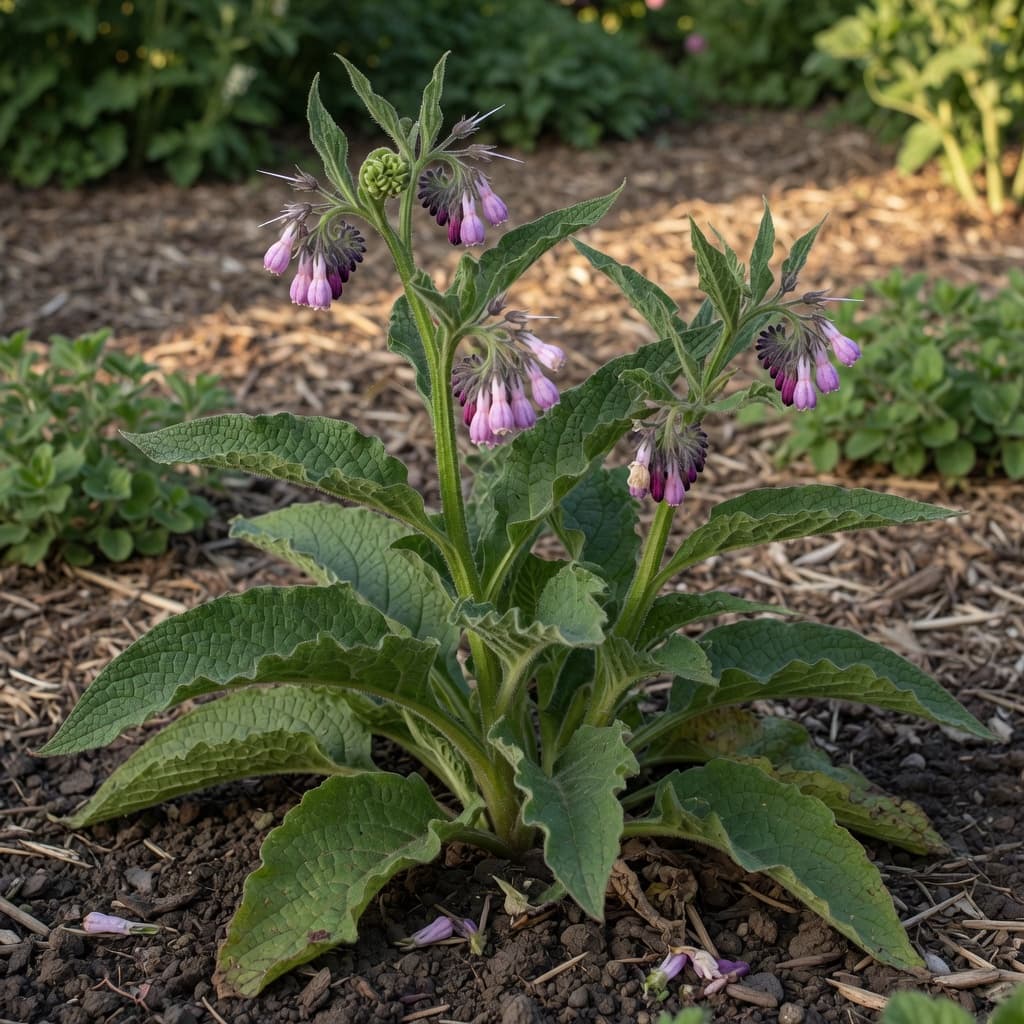
What it offers
Comfrey mines minerals from deep soil and packs them into leaves you can cut several times a season. Chop-and-drop mulch, compost activator, liquid feed (steeped leaves in water), and pollinator forage are the usual yields. The thick canopy shades soil and outcompetes many weeds once established.
Where it belongs
Ideal spots: orchard edges, chicken-run borders (where birds will not dig crowns to death), compost-adjacent beds, and dedicated “cut and carry” patches. Keep it away from tidy perennial borders you cannot mow or edge, and away from places you might sell or till later — roots are stubborn.
Prefer sterile or non-spreading types (often sold as Bocking 14) if you want leaf yield without seed escape. Still expect persistence from root fragments.
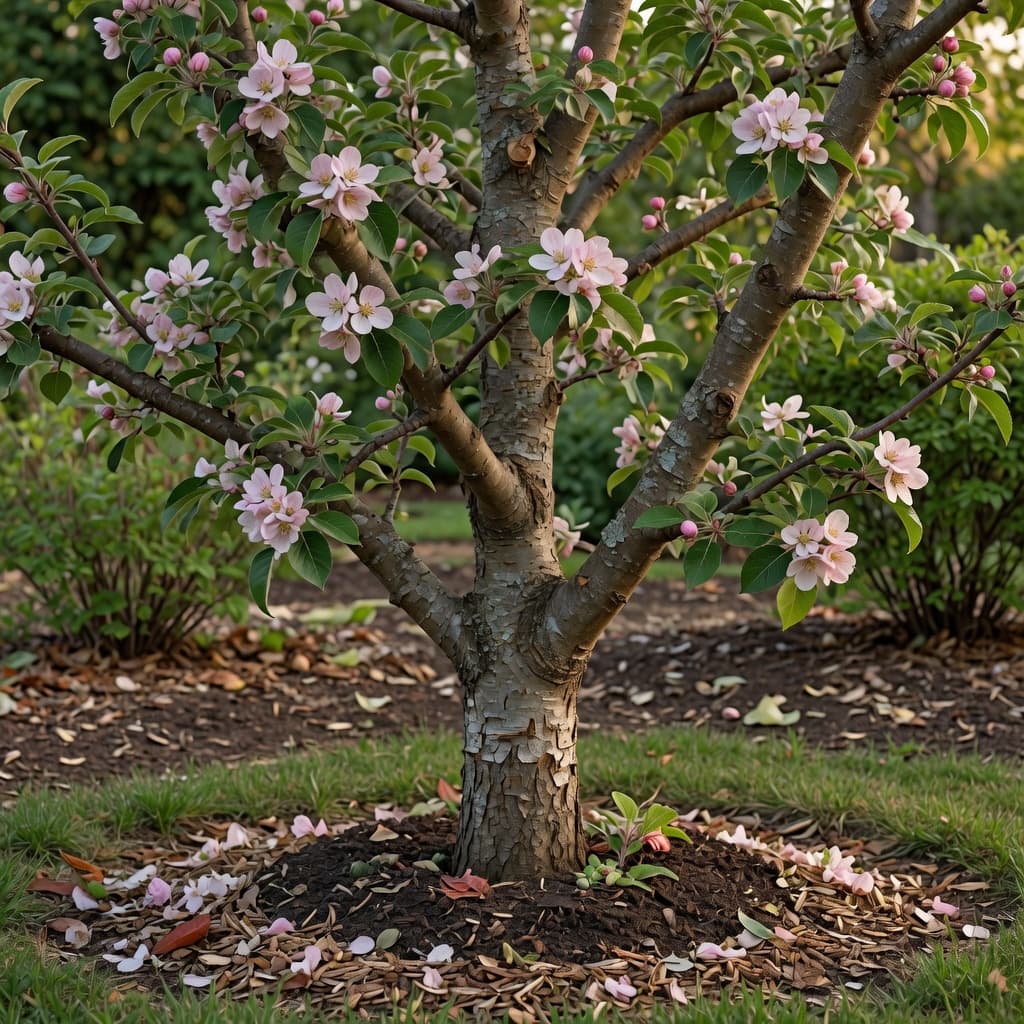
A simple chop rhythm
Let plants establish for a season before heavy cutting. Then harvest leaves when they are lush, leaving the crown intact, and lay them under fruit trees or into the compost. Three to five cuts a year is common in good soil and water; fewer in drought.
Wear gloves if the bristly leaves bother you. Do not obsess over perfect “dynamic accumulator” charts — observe whether your trees and beds look better with the mulch than without.
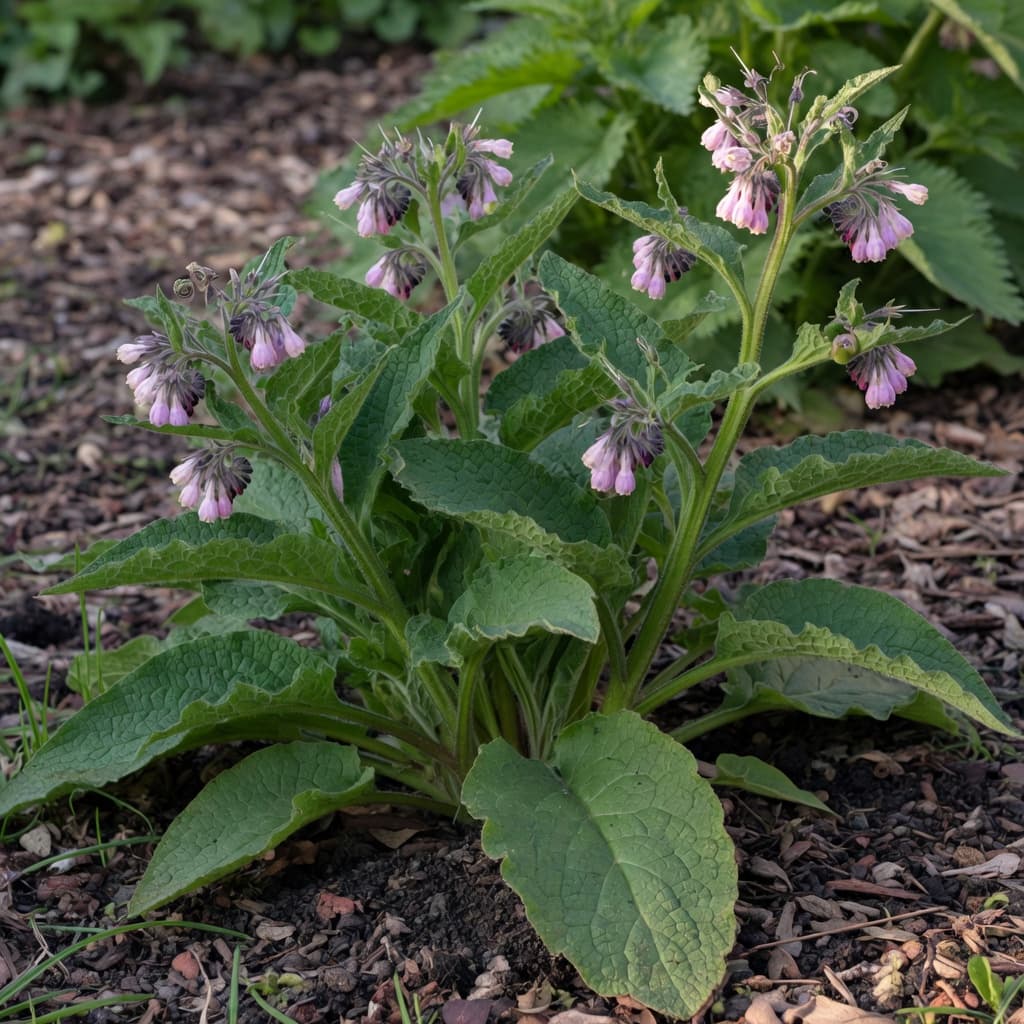
Respect the neighbors
Comfrey can shade smaller herbs and steal edge space. Give it a defined patch, edge with path chips or a shallow barrier if needed, and harvest before it flops onto crops you care about. Generosity with leaves works best when the plant has a clear job and a clear fence line.
Plant comfrey where you will cut it on purpose. Used that way, it is a battery. Used carelessly, it is a permanent roommate.